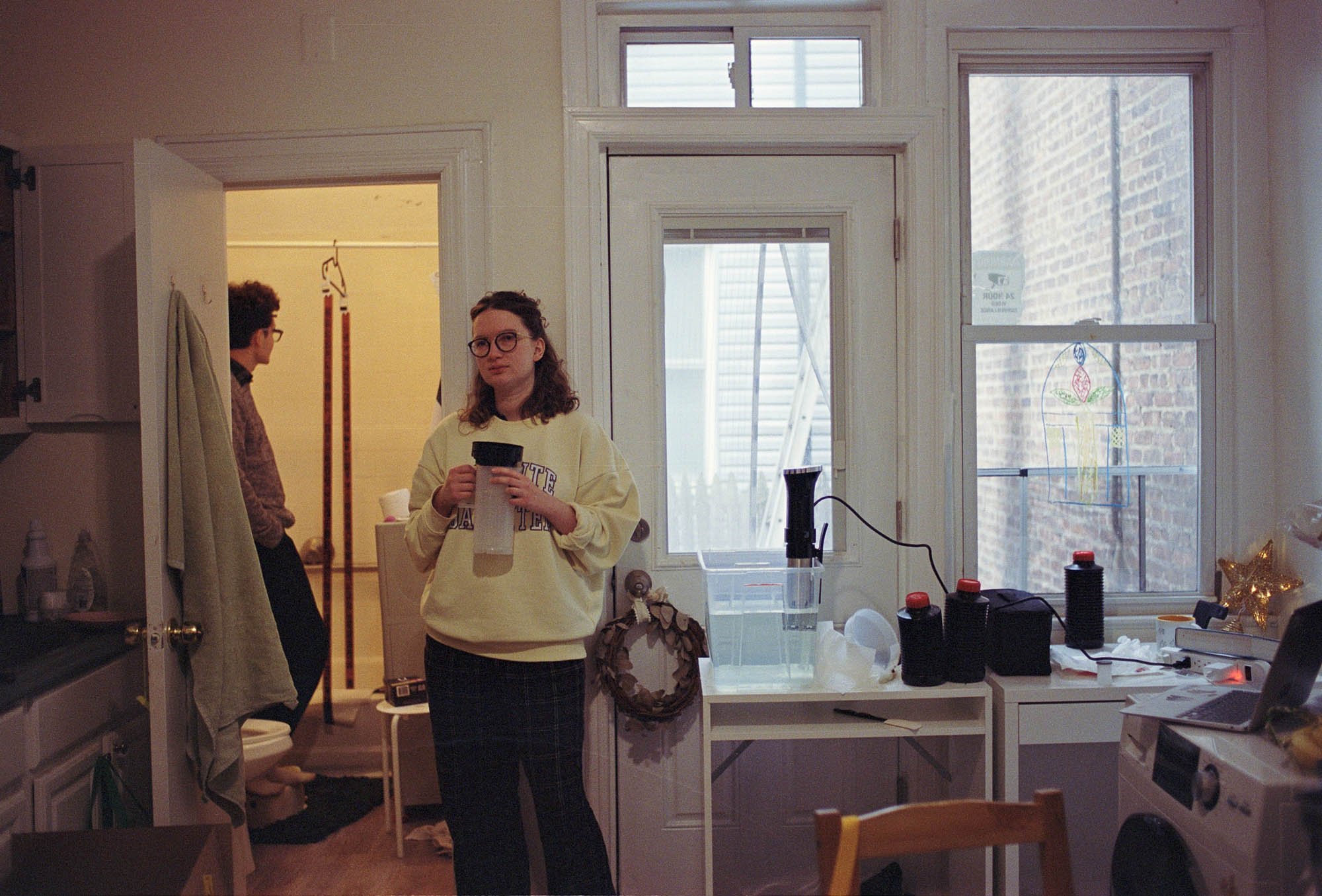
Secret Film Lab in the Heights
Winter, six rolls of film, and the night a kitchen became a darkroom
Every city has rooms that live two lives.
By day — ordinary. By night — something else entirely.
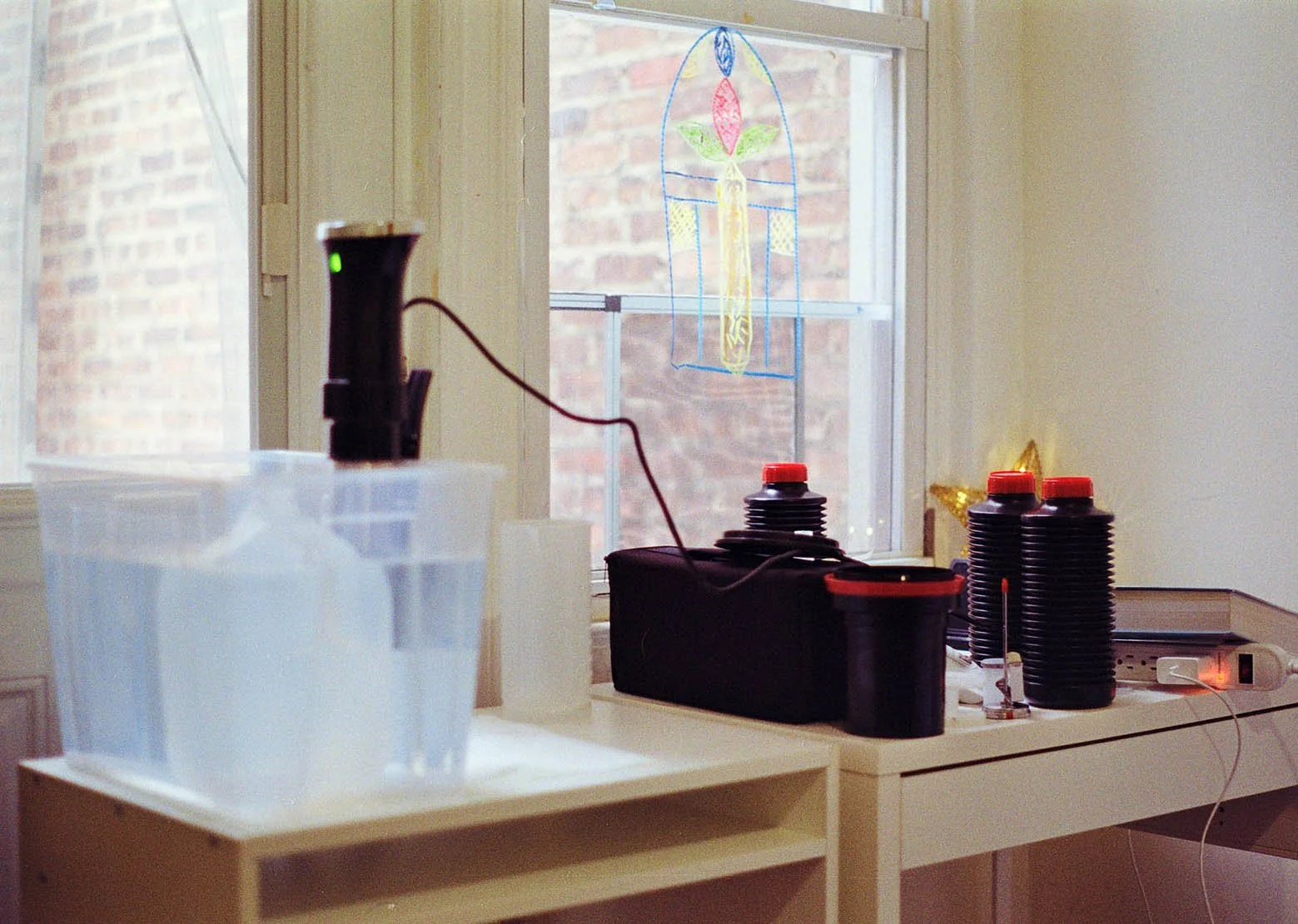
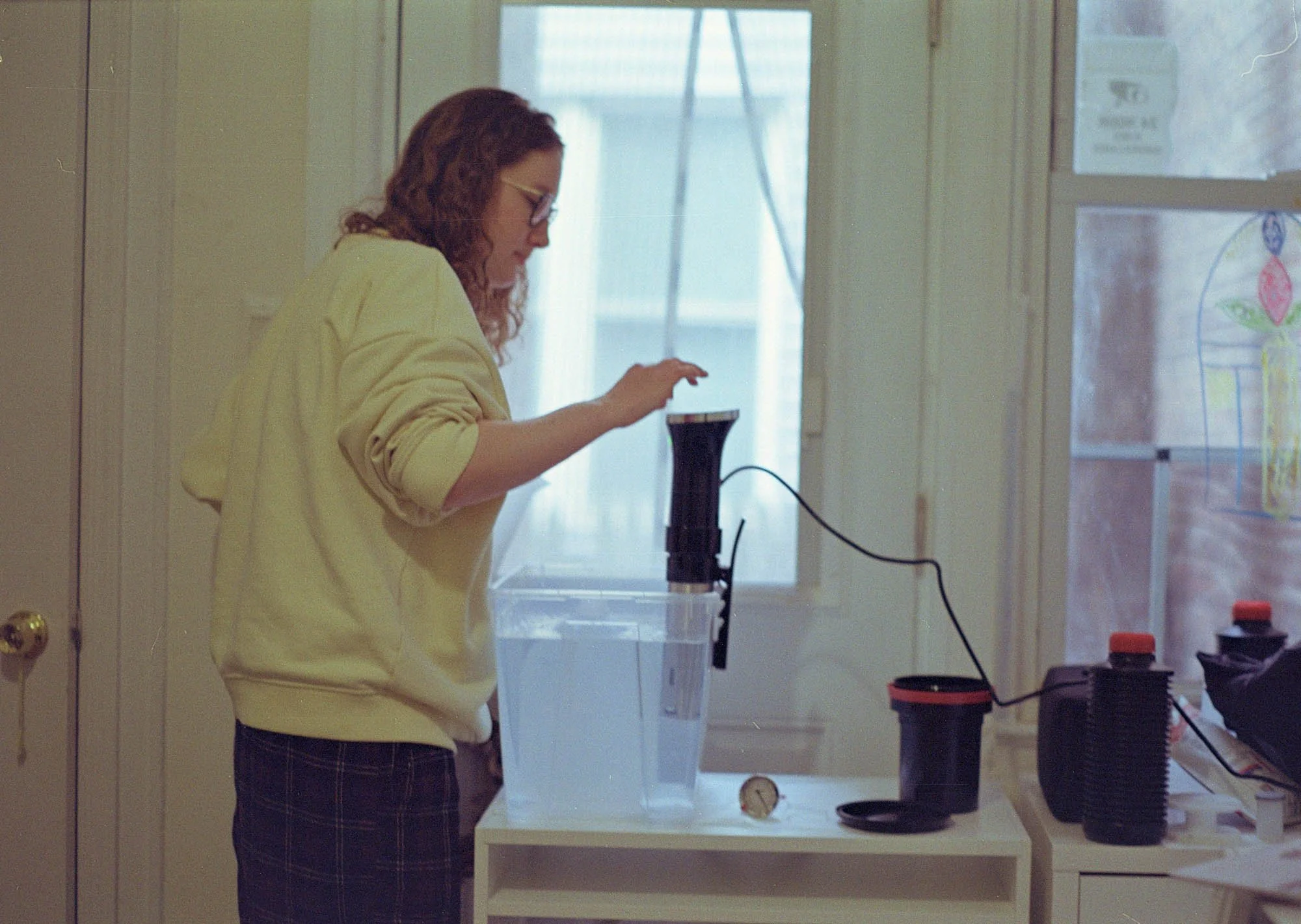
In the Heights, there is a small white table standing right by a window that faces the backyard. In winter afternoons, the light there is soft and slightly blue, the kind of light that makes everything look more honest than it is.
Recently, that table crossed an invisible border. Now it holds bottles labeled Developer, Blix, Stabilizer — words that sound less like chemistry and more like instructions for patience.
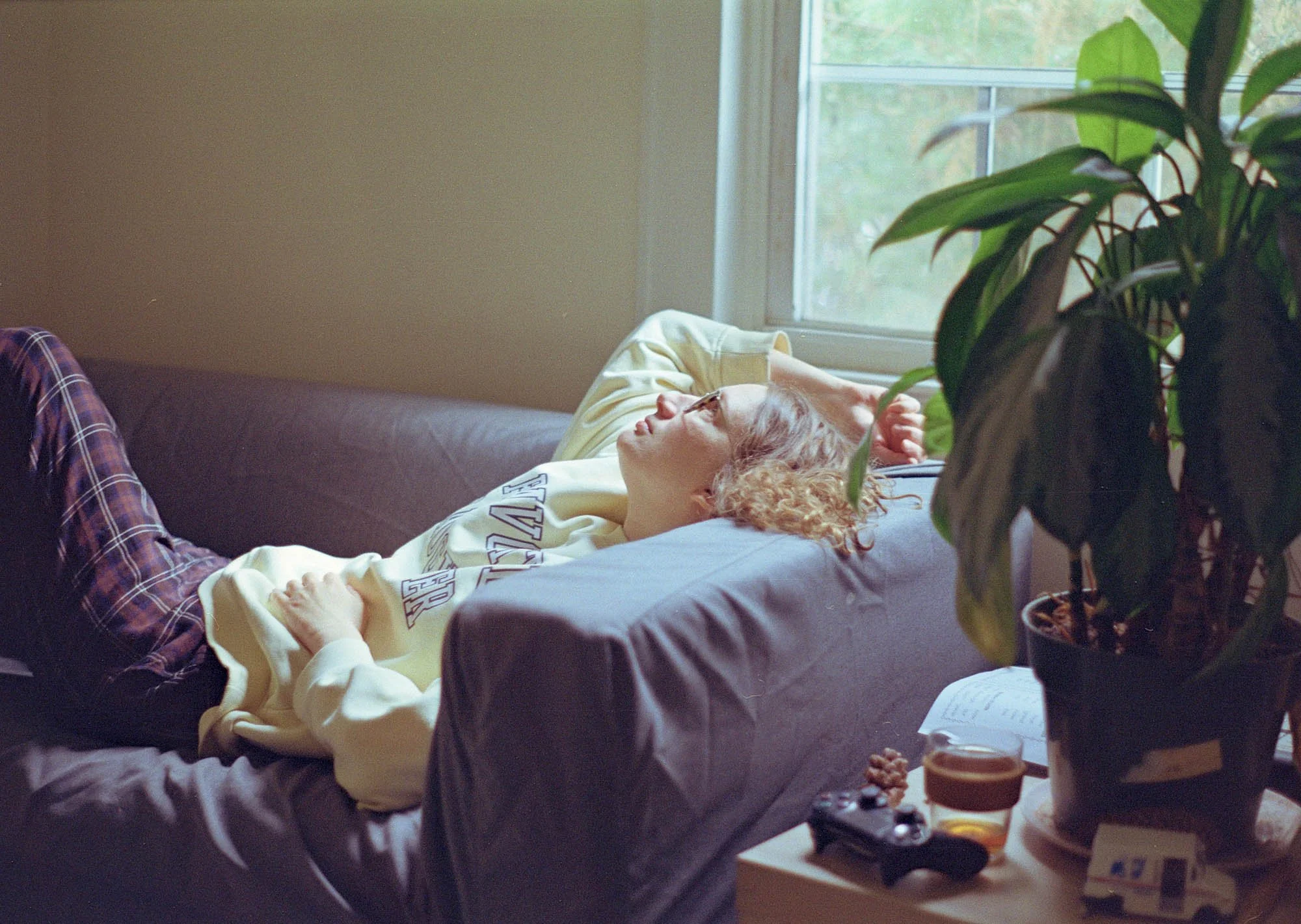
My friend Anastasia is a brilliant IT specialist — the kind of person who understands complex systems the way musicians understand rhythm. She picked up her first film camera last summer. Vintage mechanical SLRs made sense to her immediately: gears, resistance, sequence, logic. Shutter speed, aperture, focus — she learned their language quickly, almost suspiciously fast.
But winter changes the scale of effort.
And by February, she was tired of carrying every exposed roll into the city, protecting it from cold, time, and the subway.
One night, almost casually, she decided she would develop film herself.
Not someday. Not after long research.
Immediately.
A few days later, she built this:
Try it live (no signup, no API key needed):
https://nastyahammerova.github.io/film-dev-coach/
Full source code + setup guide:
https://github.com/nastyahammerova/film-dev-coach
What she made is not just a timer. It’s a step-by-step film development companion — guiding temperature, timing, agitation — built for real hands in real conditions: wet gloves, chemical drops on the table, attention split between thermometer and memory. It even includes an assistant that helps you learn, but refuses to give risky advice once development begins. A small, digital darkroom teacher that believes mistakes are expensive.
And you know what? She never failed.
In our first week, we developed and scanned six rolls. Six small archives of light, rescued carefully, minute by minute, from chemistry and chance.
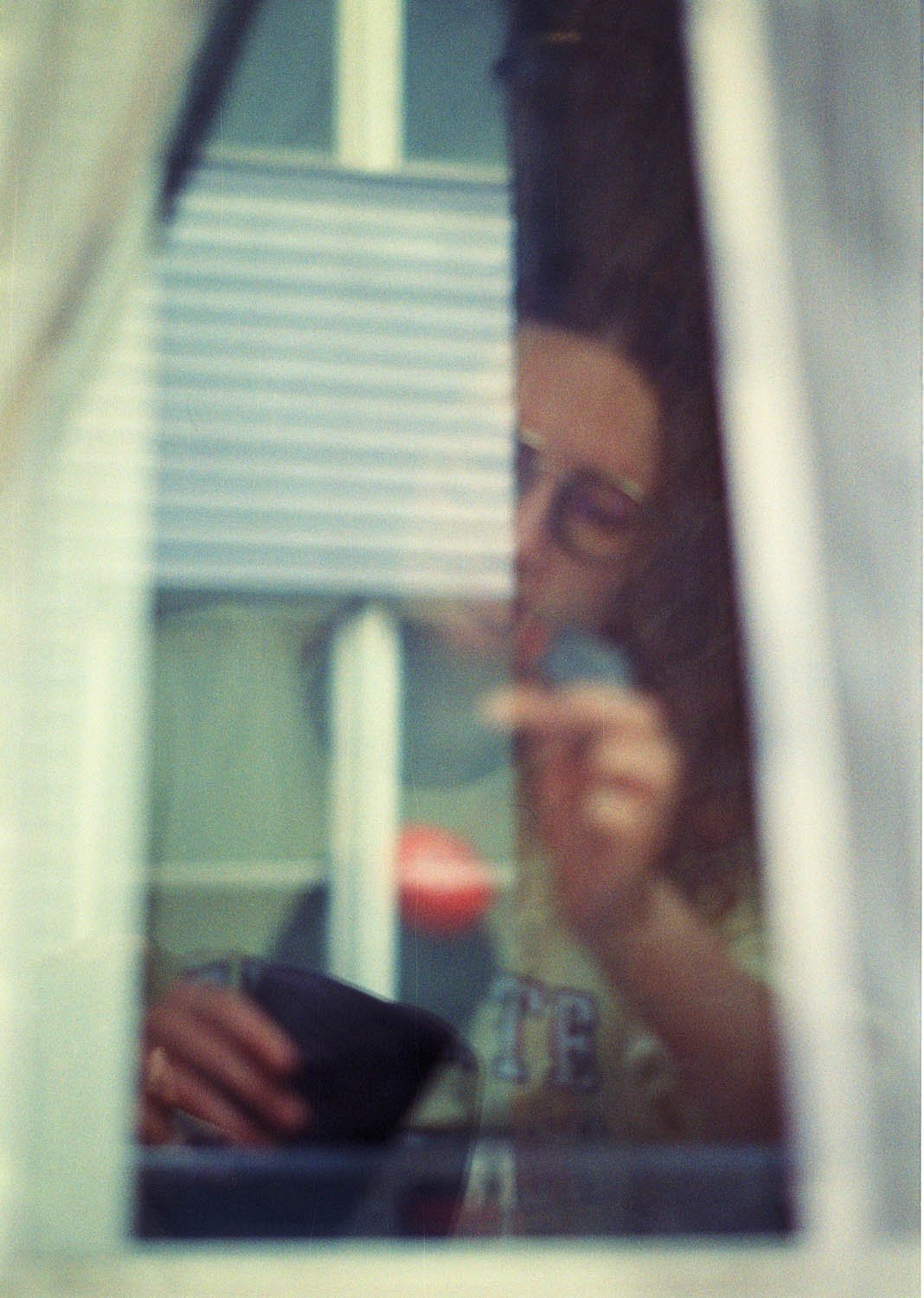
When I photographed her and the “lab” I understood something I had forgotten.
Film photography is not nostalgia.
It is a quiet act of faith.
Faith in sequence. In temperature. In the idea that if you respect time, time will give something back to you — an image that did not exist before, except as light touching silver.
Somewhere in the Heights, there is now a secret film lab.
From the street, you would never notice.
But inside, negatives are drying.
And stories are appearing, slowly, exactly the way they should.